|
Many Old Boys' from the SSGTSFB and Boys' High School
(and Westoe Secondary School before 1936) went on to make a particular name for themselves. This section is a list
of those I've been able to research
... if you know of any more, please get
in touch, however they will normally only be included once I can verify their attendance at the school. Where I can I have provided a link to an online page with more information.
The number on the right of most entries is their official admission registration number. Although of no particular relevance here, I use these numbers for research and database purposes and they're included simply as a point of interest.
There were separate series for the High School and Westoe Secondary and, in the case of the High School these numbers were "reset" a couple of times. The letter is one that I have added to indicate which series the number belongs to.
Series A (1885-1909) were the first 567 admissions to the High School. A new series (B) was started in 1909 when the High School was taken over by the local authority, with boys still attending the school being renumbered. Series C was started in 1936 on the move to Harton and the amalgamation of the High School and Westoe Secondary School, with boys from both schools being renumbered.
Westoe Secondary School also had registration numbers (W) but there is currently no documentation on these, other than when they appear in the High School records on the merger of the two schools in 1936.
| b: 30-Mar-1893 d: 21-Jan-1948 [South
Shields Boys High School 1906-1910] |
| |
After attending the High School, Albert Allan
went on to be a Traffic Apprentice in the North-East Railway. He eventually
became General Manager of the Sierra Leone Government Railway in 1938 |
#A00515 |
| b: 13-Jan-1881 d: 2-May-1964 [South Shields Boys High
School 1892-1897] |
| |
The Barbour name is known world-wide for high
quality waterproof and outdoor clothes, and it was Malcom Barbour's
father, John Barbour, who established the business in South Shields
in 1894. Malcolm went into his father's business when he left school
in 1897 and inherited the company on his father's death in 1918 |
#A00174 |
| b: 3-Feb-1931 [South Shields Boys High
School 1942-1949] |
| |
After being educated at the South Shields High
School for Boys, Dennis Boyd went into National Service at 18, and
worked variously in the Ministry of Defence, Board of Trade and Forestry
Commission. In 1979 he was appointed the Director of Conciliation
at ACAS. |
#C01211 |
| b: 1-Jan-1894 d:22-Mar-1971 [Westoe
Secondary School] |
| |
A pupil of Westoe School, George Bridge found
a career in insurance, and eventually became Deputy Chairman of Legal
and General. |
|
| b: 27-Jan-1915 d: 16-Sep-2003 [Westoe
Secondary School] |
| |
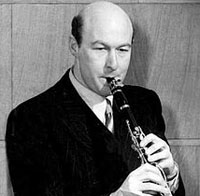
Jack Brymer was a renowned clarinettist. He started
his career in 1935 as a teacher in Croydon, and taught at Dean Park
and Cleadon Park junior schools.
He joined the RAF from 1940 to 1945,
where he served as a physical training instructor. By invitation of
Sir Thomas Beecham, he was appointed principal clarinetist for the
Royal Philharmonic Orchestra in 1946, where he stayed until 1963 when
he joined the BBC Symphony Orchestra. He became well known, not just
as a musician, but also as a radio presenter. He was Professor at
the Royal Academy of Music from 1950 to 1958, at Kneller Hall (1969-1973)
and Guildhall School of Music and Drama (from 1981). He was awarded
the OBE in 1960.
But he wasn't just a classical clarinettist - he
also had a life-long interest in mainstream jazz, having toured and
played as a soloist. |
 |
| |
Jack Brymer in Wikipedia >> |
| b: 11-Jul-1887 d: 8-May-1938 [South Shields Boys High School 1895-1905] |
| |
Son of Henry Chapman, and younger brother of Robert, Frederick Ernest Chapman studied medicine at
Durham University.
However, his greater claim to fame was as an
English Rugby Football International. He was considered to be the
most talented rugby player of the six Chapman brothers and, like
many rugby players from the school, was also a member of Westoe
Rugby Club. Freddie Chapman also represented Durham University and
Durham County, and later joined Hartlepool Rovers. He is credited
as scoring the first try, the first penalty goal and the first conversion
at the first ever International match at Twickenham Stadium (opened
in 1909) on 15th January, 1910.
|
#A00220 |
| b: 3-Mar-1880 d: 31-Jul-1963 [South
Shields Boys High School 1887-1899] |
| |
Robert Chapman was the son of Henry Chapman (Chartered Accountant
and prominent businessman in South Shields), and
lived in Woods Terrace, Westoe.
Robert was one of seven brothers
who went to the Boys' High School, and came to be School Captain
in 1896. He left to go to London University, where he gained a BA.
When he finished at university he joined the family's accountancy
firm and was active in the Durham Artillery volunteers. He bcame
a Captain in 1904 and a Major in 1908, when he commanded the 4th
Durham Howitzer Brigade. But through this, he didn't lose interest
in the school, and before it was taken over by the local authority,
he was one of the governors.
Robert Chapman fought in the Royal Artillery
in the 1914-18 war, receiving the DSO in 1916. He was made a Colonel
in 1925, and an honorary Colonel of the regiment in 1935.
His life was also bound up in politics, where he was elected to
be one of the first Councillors for the new Harton Ward, in 1921.
And in 1931 he became Mayor. In 1931 he became MP for Houghton-le-Spring,
and in 1940 he became High Sheriff of Durham.
His home was Undercliffe, a large house just on the edge of Cleadon
Village which, in the late 60s, became "St Michael's Home of
Healing". Robert Chapman didn't lose his connections with
the school - he became Chairman of the Board of Governors from around
1927 for 11 years.
|
#A00080 |
| b: 14-Mar-1915 d: 23-Oct-2009 [South
Shields Boys High School 1926-1931] |
| |
Robert Coats passed his Cambridge School Certificate in 1931, and intended to go to university to study pharmacy. However, he found himself in an apprenticeship at Parsons shipyard in Wallsend. During the war he worked on damage assessment, and qualified as an associate member of the Institute of the Marine Institute of Mechanical Engineers.
After the war he joined the turbine research group of Parsons and there he was part of the team that designed the propulsion system of the QEII, during which time he moved to John Brown's in Clydebank where he was to become Design Engineer and Technical Manager until his retirement in 1980. |
#B00882 |
| b: 1957 [South
Shields Grammar-Technical School for Boys 1969-1974] |
| |
More infamous than famous, Ian Michael Davison was reported to have fought alongside Yasir Arafat in 1983 as one of his closest bodyguards, and in 1985 was one of three gunmen who killed three Israelis aboard a yacht in Laranca harbour, Cyprus, during a 10-hour police seige. He was arrested and sentenced to life imprisonment. He is reported to have said that he was "happy" with what he had done, and had shown no remorse. In 1993 he was released and returned to London. |
#C005932 |
| b: 15-Oct-1975 [Harton Comprehensive] |
| |
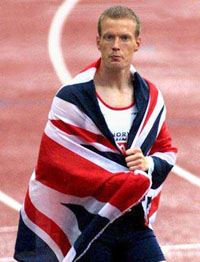
Jared Deacon is an international athlete of
some renown. Once part of South Shields Harriers, he moved to Morpeth
Harriers. As a member of Morpeth Harriers he was part of the British
Olympic 4x400m team in Sydney, 2000. In 2002, as part of the 4x400m
relay team, he won gold medals at the European Championships and Commonwealth
Games. He just missed a place on the 2004 Olympics team, but continued
to achieve good times as a 400m runner.
After retiring from professional athletics Jared went to Teesside University where, in 2008, he gained an MSc in Sports and Exercise Science and is currently (2011) a development coach for UK Athletics. |
 |
| b: 18-Mar-1942 [South Shields Boys High School & Boys Grammar-Tech 1953-1960] |
| |
After going to the SSGTSFB, Professor Edwardson
went to Nottingham and then London Universities. He has written numerous
papers on brain biochemistry and in particular on Alzheimer's Disease. |
#C02822 |
|
b: 18-May-1873 d: 26-Nov-1941 [South Shields Boys High School 1885-1888] |
| |
Harry Eltringham was one of the first 37 boys to be taken into
the High School in 1885, although he left less than three years
later, dissatisfied with the education there, and went to Durham
Grammar School instead. He later went to Trinity College Cambridge,
where he rowed in the First Trinity Eight and Four, and in the University
Trials. He became a partner in his father's shipbuilding firm, Jos
T Eltringham & Co, and was later a Director of Manchester
Dry Dock Co. However, his greater claim to fame was as a renowned
entomologist - he was made President of the Royal Entomological
Society of London from 1931 to 1932.
|
#A00031 |
|
b: 17-Apr-1929 d: 10-Feb-2002 [South Shields Boys High School 1940-1947] |
| |
John Erickson left the Boys' High School in 1947 with an open scholarship
in History at St John's College, Cambridge. He took his place after
a period of national service, gaining a BA in History in 1952, after which he remained at Cambridge doing research in Central European history until, in 1956, he was awarded a Research Fellowship.
Having learnt Russian whilst at
the High School, he naturally specialised in Russian military and
defence studies. He wrote numerous books on the Soviet military,
and spent several years as a Professor of Politics. He worked at
universities in the USA, and in 1995 was awarded an Honorary Fellowship
at the Ukraine Aerospace Academy. Like many Old Boys, John Erickson
expressed great affection and gratitude for his time at the school
- the Gazette reports "his mentors were legends at the school
and the town, namely Frank Wade, Charlie Constable and Fred Grey".
|
#C00965 |
b: 21-Sep-1940 d: 25-Sep-2013 [South Shields Boys High School 1952-1957] |
| |
Ron Fenton's long football career culminated in his spending 6 years as Assistant Manager of Nottingham Forest Football Club, with Brian Clough as Manager.
He played football throughout his time at the school, with several clubs keeping an eye on him. Although he left the school in 1957 to become an electrical engineer, he had already been signed up with Burnley as an apprentice, and in 1960 he made his first appearance for the league team.
He transferred to West Bromwich Albion for three seasons, and in 1965 moved to Birmingham City, although he never played with the first team, and he ended his playing career with Brentford in 1970.
He went on to join Notts County as coach, and was appointed Manager in 1975 until, in 1977, he moved to Nottingham Forest, under Brian Clough. Initially appointed as coach, he eventually became Assistant Manager. In 1993 he moved to help the England team, and then on to work in Malta.
His career wasn't without controversy, and he and Brian Clough were the subject of an FA enquiry into "bungs and kickbacks". They both escaped penalties - Clough, because of ill health, and Fenton, because he was living in Malta.
After a battle with cancer, Ron Felton died on 25th September, 2013, only a few days after his 73rd birthday. |
#C02728 |
| b: 6-Oct-1882 d: 13-Aug-1912 [South Shields Boys High School 1893-1895] |
| |
Robert Fenwick entered the High School in 1893, and left two years later to go to school in Jersey.
He became an aircraft designer and joined Planes Limited. There he helped design a biplane, which was built by Handley Page as the Handley Page Type B. But it was a failure - the undercarriage collapsed on its first flight, and it was then badly damaged in a storm. Fenwick redesigned it, and he used what was by then the Planes Limited Biplane to gain his pilot's licence.
He went on to design a monoplane for the company. He formed his own company, the Mersey Aeroplane Company, and took over ownership of the Mersey Monoplane, which flew successfuly in 1912 until it crashed.
Fenwick quickly redesigned and rebuilt the plane, and it joined 31 other planes in the British Military Aeroplane Competition. Run by the War Office, its intention was to find a plane for the newly-formed Royal Flying Corps.
Fenwick's plane, the 19th plane in the competition, successfuly flew the first two trial flights but on the third flight, its instability meant that it couldn't handle a strong gust of wind and it crashed on Salisbury Plain, killing Robert Fenwick. As a result the plane failed the competition.
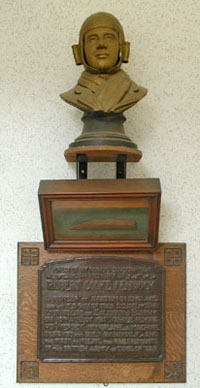
A memorial (right) was placed at the entrance to the
main hall to commemorate his name and achievements. The inscription reads:
ERECTED BY PUBLIC SUBSCRIPTION
IN MEMORY OF
ROBERT
COOKE FENWICK
A PIONEER of AVIATION in ENGLAND
and an OLD BOY OF THIS SCHOOL WHO
LOST HIS LIFE on SALISBURY PLAIN
ON 13th AUGUST 1912. WHILE FLYING
HIS 'MERSEY' MONOPLANE. A MACHINE
DESIGNED and BUILT BY HIMSELF AND
WAS FIRST to FULFIL the REQUIREMENTS
OF the BRITISH ARMY in TIME OF WAR.
|
#A00200 |
| b: 17-Apr-1948 [South Shields Grammar-Technical School for Boys 1959-1967] |
| |
John Nicholas Gray left the Grammar-Technical School in 1967 and went to Exeter College, Oxford to study PPE (Philosphy, Politics and Economics).
He lectured in political theory at the University of Essex,was a fellow and tutor at Jesus College, Oxford, and then Professor of Politics at Oxford. He also had various visiting professorships at Harvard, Yale and other universities.
He was Professor of European Thought
at the London School of Economics until his retirement in 2008.
He has written several books,
numerous articles and has appeared on Radio and Television many times.
He has a reputation as an outspoken anti-capitalist - indeed, he controversially
declared that the Al Qaeda attacks in 2001 would be seen as marking
the end of global capitalisation.
His titles include "Beyond the New Right: markets, government and the common environment" and "False Dawn: the Delusion of Global Capitalisim" - he has written such books as "Al Qaeda and What it Means to be Modern", and his most recent (at the time of writing) is "The Soul of the Marionette: A Short Enquiry into Human Freedom", published in 2015. |
#C03997 |
| b: 8-Nov-1924 d: 15-Sep-1975 [South
Shields Boys High School 1932-1940] |
| |
Son of Albert Avondale (Tanker) Hall, teacher
at the school, he left the High School in 1940 with his School Certificate, and went to Appleby Grammar School. He served in
the RAF from 1943 to 1946, studied at Queen's College, Oxford, then went on to lecture in law and eventually
became President of Corpus Christi College, Oxford (1969) |
#B01266 & C00344 |
| b: 21-Feb-1916 [South Shields Boys High
School 1927-1934] |
| |
Studied at Trinity Hall, Cambridge. Entered the Ministry of Labour in 1938 as a clerk, and
worked his way up to Permanent Secretary at the Department of Employment
from 1973 to 1976. He was awarded his OBE in 1953, his CB in 1969, and was promoted to KCB in 1974 |
#B00932 |
| b: 15-May-1925 d: 7-Apr-2002
[South Shields Boys High School 1936-1941] |
| |
Bill Hewison left the High School to go to art college. He was an
artist and theatrical cartoonist, and was a cartoonist for Punch
for over thirty years, joining such notables as Thelwell and Ronald
Searle, and was its art editor from 1960 to 1984. Following the demise
of Punch he he worked for The Times, and in his obituary
they referred to him as "the last surviving paractitioner of
a vanishing art". |
#C00521 |
| b: 29-Jan-1921 d: 28-Aug-1990
[Westoe Secondary School & South Shields Boys High School 1932-1937] |
| |
John Hutchinson initially went to Westoe Secondary School, but spent his last year in the Boys High School in Harton. His school record shows that he left to become a clerk with LNER in Pelaw, later joining the Board of Education.
But other records show that he joined the Royal Navy as an Able Seaman. After the war he studied for and gained a BSc in economics and government at London University, and in 1952 gained an MA in political science at the University of California in Los Angeles, and in 1963 a PhD in industrial relations back in London. He was appointed to the faculty of UCLA in 1964, and was promoted to professorship in 1970.
He wrote numerous articles and papers, including a book on corruption in American Trade Unions, and was a friend of Lech Walesa, and an honorary member of Solidarity. |
#W03645 & C00057 |
| b: 23-Apr-1918 d: 10-May-2009 [Westoe Secondary School] |
| |
In Who's Who, he gave his recreation as "standing in shafts
of moonlight", and this undoubtedly reflected his outlook on
life. He was born on 23rd April, 1918 (although a surprising number of references
have this incorrec) and went to Westoe Secondary School. On leaving school he went to Kings College, Newcastle, and graduated with a degree in modern languages.
He was a pacifist, which resulted in his serving time in labour camps for refusing to be conscripted.
His career led
to numerous Professorships of Poetry and English Literature around
the world, and through this time he became a prolific writer, gaining him a number of awards. He
is possibly most famous for the poem entitled "The Love that
Dares to Speak its Name", about a centurion's gay feelings towards Christ on the cross which, in 1976, landed Gay News in
court for blasphemy, and which it is still illegal to publish in
Great Britain.
On his retirement, Kirkup settled in Andorra, but his real love was Japan, where he had taught English Literature at the University in Sendai, and his ashes were scattered there in 2010.
|
|
| b: 17-Oct-1896 d: 11-Nov-1970 [South Shields Boys High School 1904-1911] |
| |
No, this isn't the Kirwan after whom Kirwan
House was named ... it was actually named after his father and headmaster, GR Kirwan.
Geoffrey Dugdale left the High School in 1911 and took a place at Repton School in Derbyshire, after which he attended University College, Oxford. During WWI he served in France from
1915 to 1918 in the Royal Garrison Artillery.
He was involved with the Royal Commission
on Police Powers and Procedure in 1928, and worked in the Ministry
of Home Security from 1939 to 1945, and continued to work in government
offices where, in 1954, as Under-Secretary of State in the Foreign Office, he was awarded the Companion of the Order of St Michael and St George.
In 1961 he became a Vice-President of the Trustee
Savings Bank.
Kirwan was the instigator of the Kirwan Prize,
by giving the school some money "to provide annual prizes in
perpetuity". |
#A00457 & B00013 |
| b: 16-Jun-1991 [Harton Technology College 2002-2007] |
| |
It wasn't until later in his school career that Joe McElderry really discovered how good a voice he had. He eventually took the lead in Grease and sang solo at other school performances where his voice really shone.
In 2007 he auditioned for X-Factor, and made it through to the "bootcamp" phase, but his young age and lack of experience resulted in his pulling out.
His academic career continued at South Tyneside College, after which he followed a performing arts course at Newcastle College.
In 2009 he had another go at X-Factor and, with huge support from his old school, made it through to the final - and in December was announced the winner, shortly after which his first single went to Number 1 in the charts.
Since then, he has made numerous recordings and appearances, and still occasionally returns to the old school. In 2011 he returned to officially open the new Sixth Form building. |
|
| b: 20-Sep-1960 [South Shields Grammar-Technical School for Boys 1972-1979] |
| |
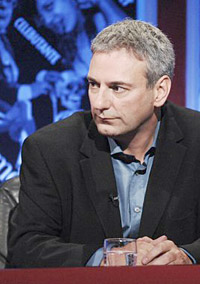
Kevin Maguire was (and still is) a Sunderland supporter, attending just about every match during his time at the school. On leaving school he attended York University, and followed a career in journalism.
He started work on the Western Daily News in Plymouth, but moved to London where he became municipal correspondent for New Civil Engineer. In 1988 he moved to the Press Association, after which, in 1990, he joined the staff of the Daily Telegraph as labour correspondent.
In 1999 he left his post as political editor of the Mirror to become Chief Reporter on The Guardian, and is currently (2012) Associate Editor of the Daily Mirror.
He has appeared many times on TV and Radio (including on Question Time, and Have I Got News For You), and even co-hosted a politics show on London's LBC radio station. |
#C06625 |
| b: 12-Mar-1926 d: 15-Sep-2002 [South
Shields Boys High School 1940-1942] |
| |
The son of a trade union organiser, shipyard worker and mayor of South Shields, James Mitchell went to Westoe Central School, transferring on a scholarship to South Shields High School for Boys at the age of 14.
His school record shows that he was 15th in a class of 34. After an "inexplicable period of truancy", he gained good grades in his English and History School Certificate, with pass grades in History, Geography, Latin, French and Maths (he failed Physics).
He left in December 1942 to become a solicitor's articled clerk.
Most accounts show that he won a scholarship to Oxford, graduating from St Edmund Hall with an MA. After spending some time in repertory theatre, he had a number of jobs, including in a shipyard, a travel agency and even the civil service.
He
settled down for a while as a teacher at Jarrow Grammar, having
gained a DipEd at King's College in Newcastle, and also taught at
the Sunderland College of Art.
But it is his writing for which he
is best-known, and he wrote his first novel, Here's a Villain,
in 1957. There followed more novels and TV screenplays. In 1967,
he wrote an episode for ABC's Armchair Theatre, called A
Magnum for Mr Schneider, in which the intelligence agent, David
Callan, first appeared - this led to the TV series Callan, which
ran from 1967 to 1972 (but with numerous spin-offs). James Mitchell
also created (and part-wrote) BBC's When the Boat Comes In.
|
#C01033 |
| b: 24-Dec-1900 d: 27-May-1940 [South
Shields Boys High School 1911-1917] |
| |
Although the school records him as Eric O'Shaughnessy, in later life he was better known by his full name of Laurence Frederick O'Shaughnessy.
A thoracic and cardiac surgeon of some renown, he had started his medical training at the Durham School of Medicine in Newcastle, where he gained his Bachelor of Medicine and Bachelor of Surgery. He quickly moved to Sudan, where he took charge of the Omdurman Hospital.
After his time in Sudan he returned home to be apppointed Research Scholar at the newly founded Buckston Browne Farm research centre in Kent from 1933 to 1935. The following year he founded a clinic in Lambeth Hospital for the treatment of cardiovascular disease.
His sister, Eileen O'Shaughnessy, had married the novelist, George Orwell (Eric Blair). In 1938, Orwell was admitted to Preston Hall Sanatorium, near Maidstone, Kent, with suspected TB, and where Eric was a visiting consultant surgeon.
Eric was called up in 1939, and was keen to be as close to the front as possible. In May, 1940, he was serving with the No 2 Casualty Clearing Station, where he was killed in an air raid. |
#B000136 |
| b: 3-Dec-1939 [South Shields Boys High School & Grammar-Technical School for Boys 1951-1958] |
| |
Specialising in photochemistry and lasers, Prof
Phillips was Deputy Director of the Royal Institution from 1987 to 1989, after which he became Professor of Physical Chemistry at Imperial College, and in 1992, Head of its Department of Chemistry. In 2002 he became Dean of the Faculties of Life Sciences and Physical Sciences, and then Senior Dean. He was also the President of the Royal College of Chemistry.
He has won many awards, including an OBE in 1999, and a CBE in 2012.
He has written over 500 books and research papers, and appeared on TV and Radio many times. He co-presented the Royal Institution Christmas Lectures in 1986 on the subject of "Crystals and Lasers", was the guest on BBC Radio 4's Desert Island Discs in May, 2011, and is occasionally seen or heard being interviewed on the news. |
#C02556 |
| b: 15-Nov-1933 d: 19-Dec-2009 [South Shields Boys High School 1949-1950] |
| |
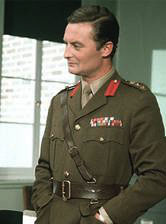
Donald Pickering was only at the High School for a year. He joined from Miss Harley's School at the age of 15, and left 16 to attend the Old Vic School of Dramatic Art. His name may not be as familiar as his face, but he appeared in numerous TV shows, including three series of Dr Who.
He made his stage debut in The Comedy of Errors at the Old Vic School in 1951, alongside such esteemed names as Prunella Scales and Patrick Widmark. His first TV appearance was in 1956 in ITV's Television Playhouse, and his final appearance was in the BBC's Holby City, in 2004.
|
#C02300 |
| b: 4-Aug-1963 [Harton Comprehensive 1974-1980] |
| |
Pickering joined Sunderland Football Club in 1977 as a "schoolboy
associate". Four years later he signed a professional contract
with the Club where he made his first-team debut against Ipswich
in August, 1981. While with the club he earned a total of 15 England
Youth under-21 caps, and then in 1983 he picked up a cap with the
England team during their tour of Australia. In 1985 he played at
Wembley in the Milk Cup Final, where Sunderland lost 1-0 to Norwich.
He then transferred to Coventry City, playing his his debut match
in 1986 and in 1987 was on the Wembley turf again with Coventry
as they won the FA Cup.
Things went downhill for Pickering after this. He transferred to
Derby County, where he played only four games for them and acquired
the nickname "psycho". Then he signed for Darlington followed
by Burnley, after which he had to retire from the game after seriously
injuring his foot. These days he is part of the sports team for
BBC Local Radio in the North-East.
|
#C07046 |
| b: 26-May-1944 d: 5-Dec-2007 [South Shields Boys High School & Grammar-Technical School for Boys 1955-1962] |
| |
Harry Quinn left the school in 1962 with an Exhibition to read English at Exeter College, Oxford, where he became an accomplished rower. In 1966 he went into teaching, initially at St Paul's School, London, but in 1979 he was appointed Head of English at George Watson's College, Edinburgh.
As Head of English, he produced many school productions, but he was also director for the Edinburgh Grand Opera company. But he also co-wrote three plays (with Colin Douglas) which were broadcast on BBC Radio 4. |
#C03277 |
| b: 25-Feb-1879 d: 8-May-1940 [South Shields Boys High School 1887-1891] |
| |
A keen rugby
player, who went on to become Chairman and Managing Director of
John Redhead & Sons, Ltd, his grandfather's ship-building company. |
#A00074 |
| b: 19-Nov-1870 d: 14-Nov-1949 [South
Shields Boys High School 1885-1889] |
| |
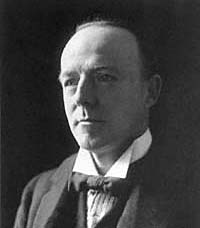
Runciman was a well-known Old Boy who gave his name (at least for
a while) to one of the school houses and who had a significant political
career.
After leaving school he was educated at Trinity College, Cambridge,
and then joined his father in his ship-building business, Runciman
Shipping Co Ltd (later called Walter Runciman & Co Ltd). He
embarked on a political career - first failing as a candidate for
Gravesend in 1898, but the following year defeating Winston Churchill
to represent Oldham. In 1900, Churchill regained the seat, but in
1902, Runciman was back in the House as MP for Dewsbury. He was
a forceful parliamentarian, and soon found himself appointed Parliamentary
Secretary to the Local Government Board. On becoming Prime Minister
in 1908, Asquith appointed him President of the Board of Education,
and in 1914 he was appointed President of the Board of Trade.
When Asquith was forced to resign as Prime Minister as a result
of the coalition crisis at the end of 1916, Runciman also stood
down. However, he continued in Parliament - failing to be re-elected
in 1918, but becoming MP for Swansea West in 1924 (and then St Ives,
in 1929). Curiously, Runciman's wife, Hilda Stevenson, was also
an MP, and between them they claimed a first in Parliament - they
were the first husband and wife to sit together in the House of
Commons.
After Baldwin gave way to Chamberlain in May, 1937, Runciman retired
as an MP (and also from his second term as President of the Board
of Trade) and moved to the Upper House as Viscount Runciman of Doxford.
In July the following year, he was invited to lead a mission to
Czechoslovakia, where he was to try to persuade the Czechs to accept
the claims of the Sudeten Germans. But these talks failed, and in
August 1938, Chamberlain announced that he would no longer be in
a position to assist the Czechs should they be attacked by the Germans.
Shortly after the failed mission, Runciman was appointed to the
post of Lord President of the (Privy) Council, but following the
outbreak of war, he resigned in ill-health which dogged him until
his death in Doxford, Northumberland, in 1949
|
#A00016 |
| b: 6-Jan-1881 d: 14-Feb-1943 [South
Shields Boys High School 1889-1900] |
| |
Worked in the Indian Educational Service. Director
of Public Instruction, Punjab (1931) |
#A00144 |
| b: 18-Sep-1911 d: 13-Mar-1986 [South
Shields Boys High School 1926-1930] |
| |
Francis Scarfe came to the High School from the Royal Merchant Seamen's Orphanage, Wokingham, at the age of 15. After
attending the school, Scarfe went to Durham and then Fitzwilliam College,
Cambridge,, and then on to the Sorbonne in Paris, where
he wrote surrealist poetry, and "dabbled" in communism.
He lectured in French poetry at the University of Glasgow, and in
1959 became Director of the British Institute in Paris. In his time
in Paris he was made a Chevalier des Arts et des Lettres, as
on his retirement was made a Chevalier de la Légion d'Honneur. |
#B00919 |
| |
Francis Scarfe in Wikipedia >> |
|
| b: 30-Dec-1913 d: 24-Feb-1980 [South
Shields Boys High School 1925-1931] |
| |
Chairman of the Newcastle Labour Party from 1958-1976.
Councillor and JP. Chairman of Tyne & Wear Passenger Authority
in 1973 |
#B00846 |
| b: 21-Jun-1945 [South Shields Grammar-Technical
School for Boys 1956-1963] |
| |
Managing Director, Greater Manchester Buses
South Ltd in 1993 |
#C03468 |
| b: 7-Oct-1905 d:10-Mar-1976 [Westoe
Secondary School 1916-1922] |
| |
After leaving school, Robert Spence was educated
at King's College, Durham. He went to to be Commonwealth Fellow at
Princeton University, USA from 1928 to 1931, and then became lecturer
in Physical Chemistry at Leeds University. During WWII he was Chemical
Warfare Adviser to the RA, based in the Middle East, and he then moved
on to be Head of the Chemistry Dvision at the Atomic Energy Research
Establishment at Harwell, where he stayed to eventually become its
Director, in 1964. He left in 1968 to become Professor of Applied
Chemistry and Master of Keynes College at the University of Kent where,
in 1973 until his death, he was Professor Emeritus. |
|
| b: 1-Oct-1933 [South Shields Boys High School 1944-1951] |
| |
After studying at Durham University, John Stoddart eventually became Director of Research, Institute of Grassland
and Environmental Research at the Agricultural and Food Research Council
until 1993 |
#C01553 |
| b: 6-Sep-1949 [South Shields Grammar-Technical
School for Boys 1961-1966] |
| |
After leaving the school, and inspired by his
acting experience with the National Youth Theatre, Paul Thain went
on to read Drama and Theatre Arts at Birmingham University. Although
he went into teaching, he gave this up to become a full-time parent
and playwright.
Although he has written a number of stage plays, his
most widely heard scripts have been for radio. In 1981 his Radio
4 play, "The Biggest Sandcastle in the World", won the Giles
Cooper Award for Best Radio Play and in 1995, his play "The Paradise Machine" won the European Broadcasting Union's Best European Drama award. |
#C04481 |
| b: 23-Jan-1990 [Harton Technology College 2001-2005?] |
| |
Martyn Waghorn is currently a striker with Leicester City Football Club.
He started his career as early as 8, playing for Sunderland's youth team, since when he has played for Sunderland first team, Charlton Athletic, Hull and Leicester City.
He played for England's Under-19 squad in 2009, and the Under-21s in 2011. |
|
| b: 18-Aug-1928 [South Shields Boys High
School 1939-1946] |
| |
David Walker went
straight from South Shields High School to do his National Service
in the Royal Naval Air Service.
He gained his degree at Kings College, Newcastle, followed by a lifetime in academia, driven
by a consuming interest in plant life, and through it he has served
at universities in the USA, Durham, Cambridge, London and Sheffield.
He has produced 230 publications, including four books mainly related
to photosynthetic carbon assimilation, and has provided guidance in
plant productivity training courses all over the world.
Since 1993
he has been Emeritus Professor of photosynthesis at the University
of Sheffield. |
#C00871 |
| b: 14-Apr-1922 d: 13-Jan-1958 [South Shields Boys High
School 1933-1938] |
| |
Jimmy Wallace was a keen swimmer, and was on the school's swimming team.
He joined the RAF as a bomber pilot for the war, and afterwards became an RAF test pilot. He was commissioned in January, 1944, and was awarded the Air Force Cross in June, 1957.
He was stationed at RAF St Athan, near Cardiff. While test-flying a Canberra B6 bomber, the engines inexplicably failed and he crashed in a field near Llangennech railway station, three miles east of Llanelli. He was hailed as a hero by the locals when an eye-witness reported that, with both engines out, Wallace (flying with no crew) was clearly steering the plane away from the station.
In his honour, his parents visited the school and presented a trophy in their son's name. |
#B01332 & C000179 |
| b: 8-Dec-1892 d: 20-Oct-1976 [South
Shields Boys High School 1904-1911] |
| |
After leaving school, Eric Weston attended St John's College, Cambridge, on an open scholarship.
Knighted in 1954, Sir Eric Weston became a Judge,
and spent most of his career in India, including the Chief Justice
of the Punjab High Court in Simla. |
#A00473 & B00022 |
| b: 9-Apr-1985 [Harton Comprehensive 1996-2001] |
| |
David Wilson gained his first rugby Test cap in England's 37-15 win against Argentina in June, 2006. He had previously been part of the England squad in their 2008 match against New Zealand in Christchurch, but wasn't called upon to play.
After leaving Harton School he went on to East Durham and Houghall Community College, and made his debut with the Newcastle Falcons rugby team in 2003.
Although injuries dogged him from 2004 and saw him having to withdraw from several games, he had a very successful career, including playing for Bath for two years from 2009, and in 2012 he was called up to England's elite squad for the autumn Test.
He continues to play rugby for England, although he started his 2013 championship season on the bench. |
|
| b: 13-Jul-1947 d: 2-Feb-2008 [South Shields Grammar-Technical School for Boys 1958-1965] |
| |
Edward Wilson is first mentioned in the ATOM as part of the cast
of the 1960 junior School Play, What Weather!. He played
the part of the Government Minister of Weather, and the review says
"the part ... was taken with a surprising expertise by Edward
Wilson, a boy whose ability augurs well for the future". Little
did the reviewer know that Ed Wilson would eventually become a professional
actor and Artistic Director of the National Youth Theatre.
Known to his family and some of his friends as "Billy" Wilson, he went through his schooldays earning great praise for his roles in the School Plays - Lucy in The Rivals (1961), Truffaldino
in The Servant of Two Masters (1962), Mrs White in The
Monkey's Paw (1963), and Haryrazon in The Miser (1964),
and in his senior years he produced the Lawrenson House plays for
the House Drama Festival.
After leaving school, he went to Greatsmith's Training College, London. he made a number
of appearances on television. His first recorded TV appearance was in 1965, in an episode of a series made in Canada called Seaway. Perhaps his most notable appearance was as the occasional character of Billy Seaton
in When The Boat Comes In by James Mitchell (also an Old
Boy of the school).
In 1987 became Artistic Director of the
National Youth Theatre. His final season with the NYT ended in 2003,
when he went to Holywood to become director of the Los Angeles Young
Actors Company, at the Ivar Theatre. Ed died of cancer in Los Angeles
at the age of 60.
|
#C03904 |
| b: 16-Apr-1927 d: 2-Sep-2002 [South
Shields Boys High School 1938-1945] |
| |
Robert Wilson's father had been a miner all his life, and wanted
more for his son. Although a keen sportsman, he also excelled academically.
After going to Laygate Lane School and South Shields High School
for Boys, he studied for his BSc at Newcastle* and then went on to
post-graduate studies at Edinburgh where his doctoral thesis in
1952 was on the optical spectroscopy of O-type stars.
Armed with
his doctorate, he joined the staff of the Royal Observatory in Edinburgh.
He quickly became recognised as a formidable scientist in astronomy,
and in 1968 went to the US to become the first non-American to receive
the Presidential Award for Design Excellence from President Reagan.
He was awarded his CBE in 1978, and kinghthood in 1989 for his services
to astronomy. Among his notable activities, he was involved in the
design and operation of the Ultra-Violet Explorer satellite, which
led to major dsicoveries in the field of cosmology, and which continued
to operate some 17 years after its designed life.
* Although several references state that he got his BSc at Newcastle, his school record shows that he got a state bursary and attended Cambridge University. |
#C00784 |
| b: 30-Oct-1953 d: 10-Apr-2013 [South
Shields Grammar-Technical School for Boys 1965-1972] |
| |
Ed Wraith left the school in 1972 to attend Sheffield University, after which he trained in paediatrics and metabolic disease in Manchester and in Australia. An acknowledged international expert on a number of metabolic diseases, he was presented in 2009 with the Well Child "Best Doctor" award by Prince Harry.
Since 1987 he had specialised in a rare group of inherited disorders called mucopolysaccharide diseases, and ran clinics around the world. He spent the last years working as a Consultant Paediatrician at the Royal Manchester Children's Hospital.
bhs
|
#C05242 |
|
|

